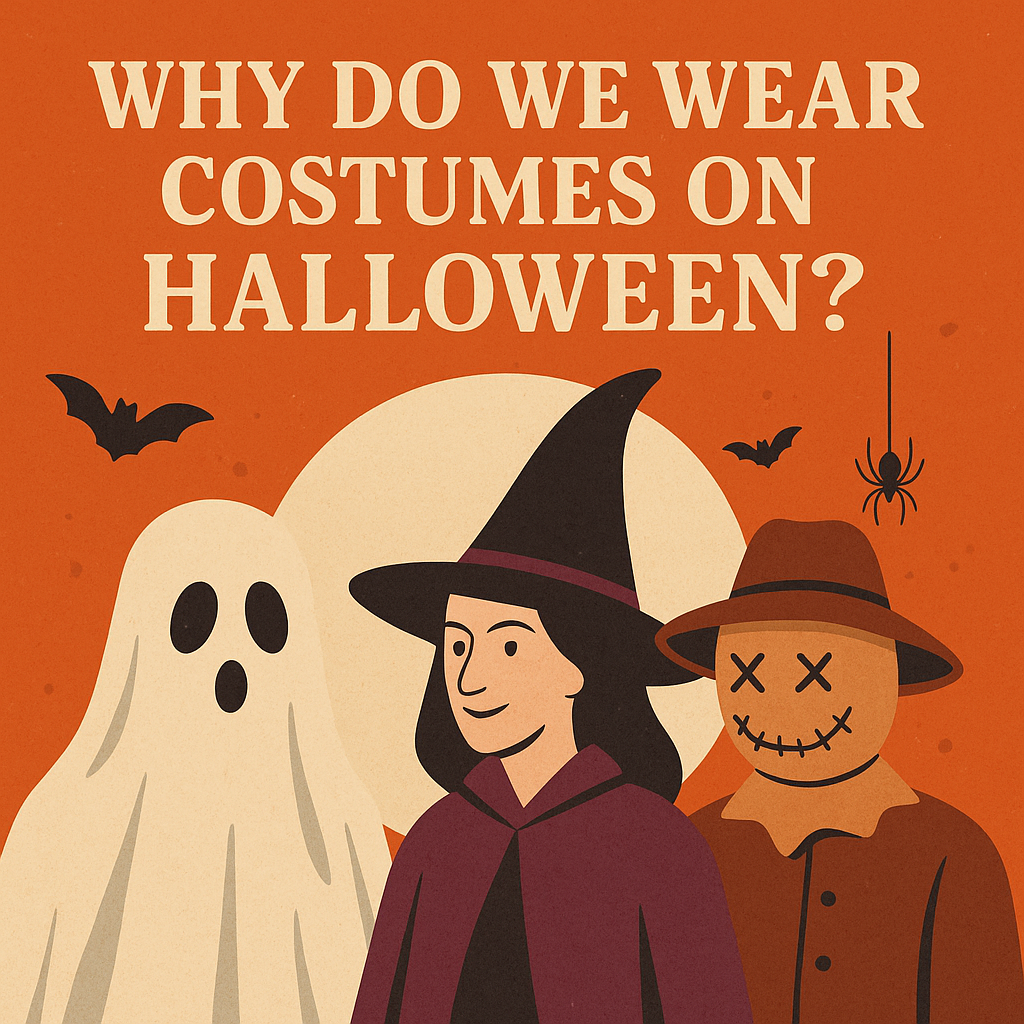
Why do we wear costumes on Halloween? It’s something so ordinary today that we rarely stop to think about it. But behind the face paint, witch hats, and superhero capes is a history that reaches back centuries—one built on fear, folklore, and a touch of fun.
Long before Halloween became a night for parties and candy, the ancient Celts held a festival called Samhain. It marked the end of the harvest season and the beginning of winter, a time they believed the boundary between the living and the dead grew thin. Spirits were said to wander on that night, seeking warmth and light. People feared being recognized by these wandering souls, so they disguised themselves in animal skins and masks to blend in, hoping the spirits would pass them by.
Over time, these disguises took on new meaning. When the Christian church spread through Europe, many old festivals blended with newer traditions. All Hallows’ Eve, the night before All Saints’ Day, began to absorb the customs of Samhain. People still wore costumes—not just to hide from spirits but also to play tricks, tell stories, and take part in community gatherings.
As immigrants from Europe came to America, they brought their Halloween customs with them. By the late 1800s, Halloween became more of a community celebration than a night of fear. Children and adults dressed up as ghosts, devils, and witches, going door to door, not to frighten neighbors, but to share in the fun of the season. Costumes slowly shifted from homemade masks and sheets to store-bought outfits, reflecting pop culture, famous characters, and lighthearted scares.
Today, wearing a costume isn’t about hiding from spirits anymore. It’s about stepping into another world for a night. A child can be a pirate or a princess. An adult can be a vampire, a scarecrow, or something completely made up. It’s a playful nod to a night once filled with real superstition.
So the next time you pull on a mask or slip into a costume on Halloween, you’re taking part in a tradition that’s older than candy corn and carved pumpkins. It’s a thread that connects the fear of ancient nights to the joy of modern celebrations.


Leave a Reply