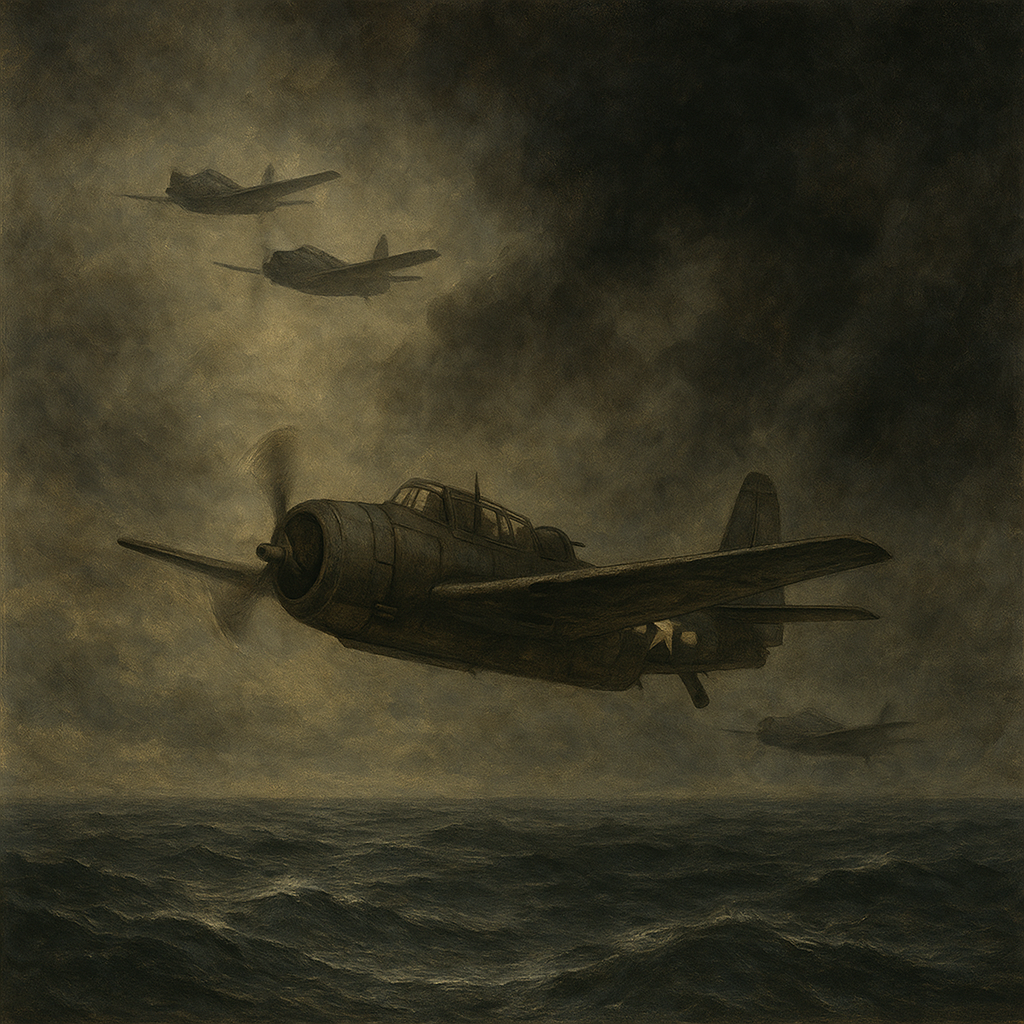
On the afternoon of December 5, 1945, five U.S. Navy torpedo bombers took off from Fort Lauderdale, Florida, on a routine training flight. Their mission, called Flight 19, was simple: practice navigation over the Atlantic, drop a few practice bombs, and return home before dark.
The weather was clear. The pilots were experienced. Nothing seemed out of the ordinary.
But as the hours passed, radio operators began to hear strange, panicked transmissions. The flight leader, Lieutenant Charles Taylor, sounded confused. His compass wasn’t working. Neither was the backup. The men could see land, but Taylor insisted they were over the Florida Keys, when in truth they were far to the east. His voice grew desperate: “We can’t tell where we are… everything looks strange, even the ocean.”
The squadron continued to wander, circling, low on fuel. Other bases tried to guide them back, but the signals were garbled. As night fell, the radio went silent. No trace of the five planes—or the fourteen men aboard—was ever found.
Even stranger, a rescue plane sent to search for them also disappeared, along with its thirteen crewmen. In total, six aircraft and twenty-seven men vanished in a single day, swallowed by the sea without a scrap of wreckage left behind.
Since then, the legend of Flight 19 has grown. Some say fierce storms or hidden currents pulled them under. Others whisper of magnetic anomalies, UFOs, or a gateway to another dimension in the infamous Bermuda Triangle.
What we know is this: those planes never returned. And to this day, on the warm December winds off the Florida coast, sailors sometimes claim to hear faint echoes of radio static—lost voices calling out across the dark water.
Happy Halloween—some disappearances leave behind only silence.



Leave a Reply