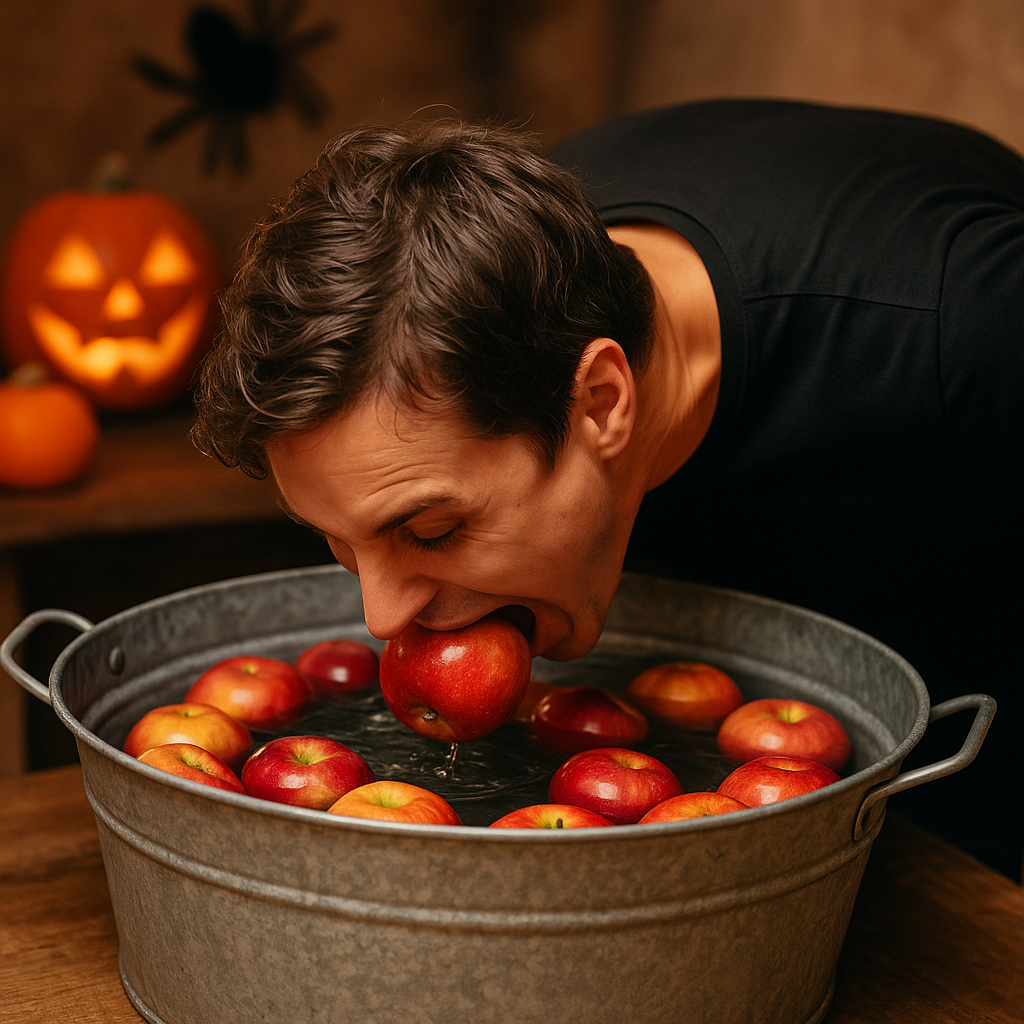
Bobbing for apples is one of the most enduring Halloween traditions, and its origins go back centuries. The practice is rooted in Celtic and Roman customs that were later absorbed into Halloween as the holiday spread and evolved. It was never simply a party game; it carried meaning tied to harvest, fortune-telling, and the season itself.
The Romans celebrated a festival in honor of Pomona, the goddess of fruit and orchards. Apples were sacred to her, symbolizing fertility and abundance. When Roman traditions merged with Celtic Samhain customs, apples became a central part of seasonal rituals. Samhain marked the end of harvest and the beginning of winter, a time when people sought signs of luck and guidance for the months ahead.
By the Middle Ages and later in colonial America, bobbing for apples was commonly linked to courtship and divination. The belief was that the first person to successfully bite into an apple would be the next to marry. Some versions of the game even tied different apples to specific suitors, turning it into a form of fortune-telling for young people curious about love and marriage.
Beyond marriage customs, apples carried symbolic weight in folklore. They represented knowledge, temptation, and destiny in different traditions. On Halloween, when the boundary between the living and the spirit world was believed to thin, games like bobbing for apples became a way of seeking signs about the future in a lighthearted but meaningful way.
Today, bobbing for apples is mostly remembered as a festive game for Halloween gatherings. Its original connections to divination and seasonal rites have faded, but its presence at parties still recalls those older layers of symbolism. It survives as a reminder that Halloween was once a night of ritual, harvest celebration, and looking ahead to the future.



Leave a Reply