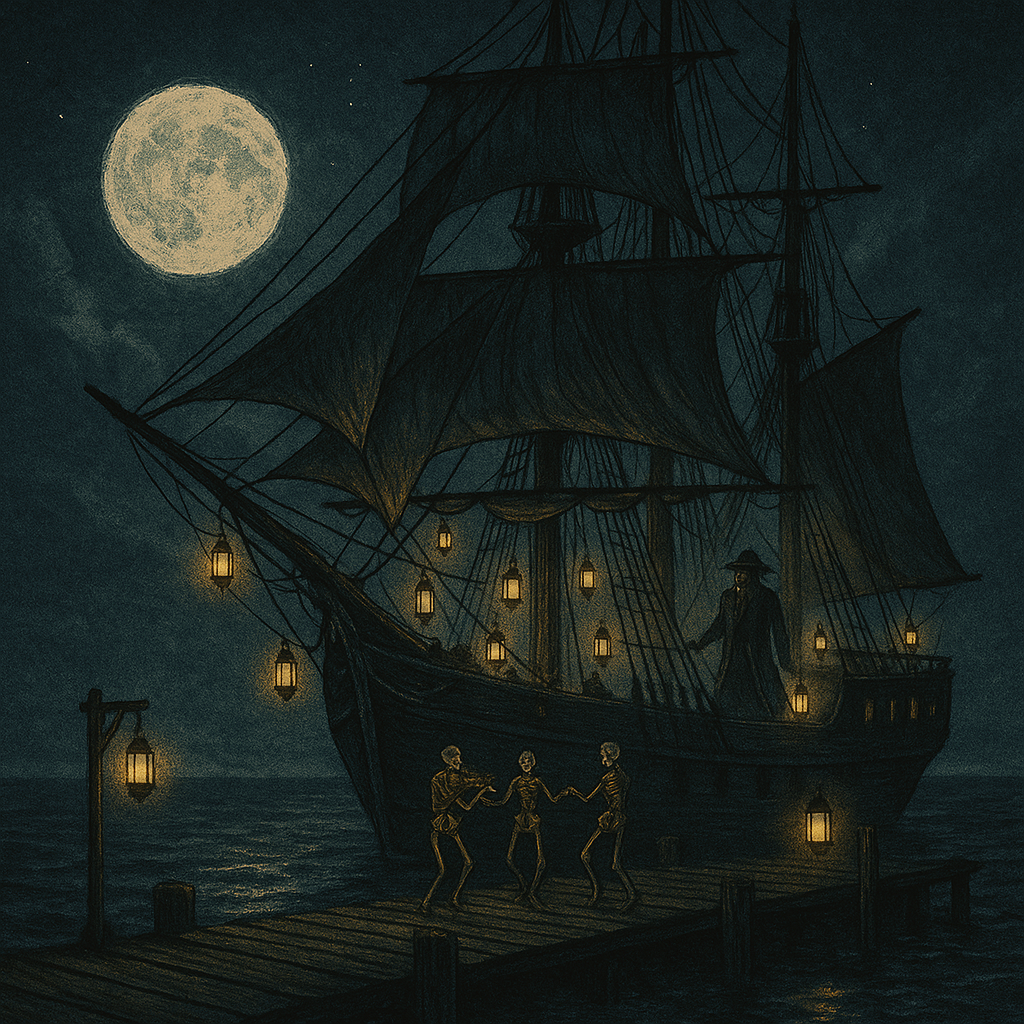
They still whisper of the Midnight Tide, a ship that slipped across dark waters with a crew damned by their own greed.
It was 1723 when the Tide last set sail from Havana. She was no ordinary vessel, her black sails caught the moonlight like blades, and her prow carried a carved mermaid whose face seemed to shift with every storm. Some said she was carved from driftwood taken from a drowned woman’s coffin. Others swore the wood bled when struck.
The captain, Elias Dorne, was a man already half in love with the abyss. His crew followed him because he promised fortune, plunder beyond their wildest hunger. But what he promised, he could never give, because the Midnight Tide was not a ship of the living.
Their first night out, the winds died, yet the ship moved forward without oars or current. One of the men leaned over the rail and saw hands not fish, not dolphins, but pale, reaching hands gripping the hull, dragging the ship forward as though towing it into deeper seas.
By the second night, laughter echoed in the rigging though no man climbed there. The crew avoided the upper deck after sundown, for a shadowy figure would swing from rope to rope with eyes that glowed like burning coal.
The third night brought mutiny. Half the crew tried to abandon ship, lowering a boat with frantic hands. But when the boat hit the water, the sea beneath it boiled as if it hated the thought of losing them. Men screamed as their flesh blistered. They dove overboard to escape the boiling water only to vanish beneath waves that never once splashed.
Dorne only smiled. “You signed on for wealth,” he told those who remained. “The sea always collects her price.”
By dawn, the Midnight Tide had no sails raised, no anchor dropped, yet she drifted into a fog so thick the sun could not burn it away. In that fog, men began to hear their own voices calling them, familiar, pleading, as if their mothers, wives, and children were hidden just out of sight. One by one, they followed those voices into the mist and never returned.
No man knows what truly happened on the fourth night. But fishermen off the Florida Keys swore they saw the ship, gliding silently, every crewman standing stiff at the rail with eyes like dead glass. The mermaid figurehead had changed, too, her mouth stretched open as though screaming, though no sound came.
Since then, the Midnight Tide is said to appear only on moonless nights, its cursed crew bound to the vessel forever. If you see her, you must never call out, never raise a lantern, never look too long into those hollow eyes along the deck. For they will see you, and they will remember the hunger that chained them.
Some say she sails near the reefs of the Gulf, where broken ships pile like bones. Others claim she prowls the Atlantic, looking for sailors who whisper her name. A few insist she can be summoned if you carve her mermaid into wood and place it beneath your pillow, but those who try are never seen at morning light.
And the captain? They say Elias Dorne still walks his decks, boots ringing on cursed wood, always seeking the next greedy fool who thinks fortune waits at sea.
When the tide runs black at midnight, listen well. You might hear the creak of a ship that isn’t there, the groan of ropes without a wind, the faintest sound of laughter in the rigging.
And if you do, pray the fog does not follow.



Leave a Reply