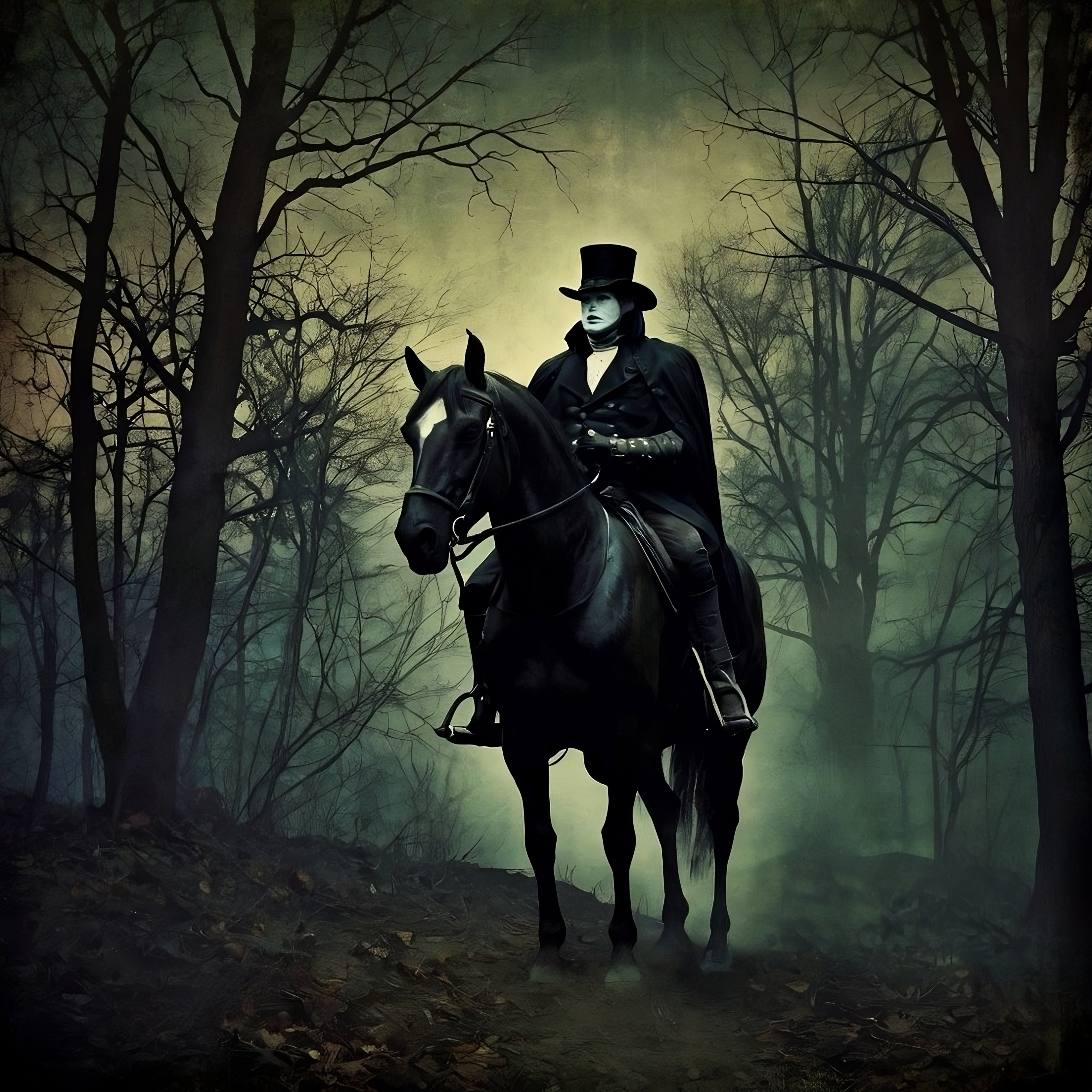
When you think of Sleepy Hollow, you probably picture a dark, misty road, the thunder of galloping hooves, and a headless horseman carrying a glowing jack-o’-lantern. Washington Irving’s 1820 short story The Legend of Sleepy Hollow made this eerie image famous—but the roots of the tale go deeper than fiction.
The Setting: A Quiet Valley with a Mysterious Past
Sleepy Hollow is a real place—nestled along the Hudson River in New York’s Westchester County. In the late 1700s and early 1800s, it was a small Dutch settlement surrounded by dense forests and winding roads. Locals spoke of the area as “bewitched,” a place where strange sights and sounds were common.
These eerie whispers weren’t entirely unfounded. The Hudson Valley was steeped in old European ghost stories brought over by Dutch settlers, blending with Native American legends tied to the land.
The Inspiration for the Headless Horseman
Irving’s most famous ghost—the Headless Horseman—may have been inspired by German folklore. Tales of headless riders, often ghostly soldiers, were common in Europe long before the story took root in America.
One likely influence was the legend of a Hessian soldier who lost his head to a cannonball during the Revolutionary War. Local lore claimed his ghost roamed the area at night, searching for his lost head. Irving likely wove this grim story into his own chilling creation.
Ichabod Crane and the Power of Storytelling
In the tale, Ichabod Crane, a lanky schoolteacher, competes with local hero Brom Bones for the affection of Katrina Van Tassel. One fateful night, after leaving a harvest party, Ichabod encounters the Headless Horseman on a dark road. What happens next—whether supernatural or the result of a prank—remains a mystery.
Irving’s genius was in creating suspense and leaving just enough ambiguity for readers to wonder. Was the Horseman real, or was Brom Bones behind the scare? The answer depends on whether you believe in ghosts… or in human mischief.
The Legend Lives On
Today, Sleepy Hollow embraces its spectral reputation. The village hosts lantern-lit cemetery tours, reenactments, and festivals each October. Visitors can walk the Old Dutch Churchyard, cross the Headless Horseman Bridge, and feel the same autumn chill that inspired Irving over 200 years ago.
The enduring power of The Legend of Sleepy Hollow lies in its blend of history, folklore, and imagination. It’s a reminder that the best ghost stories often have one foot in truth and the other in mystery.



Leave a Reply